If you have spent any time in the ADHD corner of the internet, you have likely been pelted with advice about "hyper-focusing" your way to productivity. But let’s https://addmagazine.co.uk/adhd-and-the-creative-mind-why-medical-cannabis-is-changing-things/ be clear: when we talk about the ADHD brain, we are talking about a unique cognitive style—a divergent, rapid-fire processing system—that is often pathologised as a mere deficit. To understand how this brain actually functions, we have to look past the clinical checklists and ask the real question: What does this look like on a Tuesday at 3pm?
For many, 3pm on a Tuesday is the graveyard of the workday. It is the moment when the novelty of the morning has worn off, the caffeine has crashed, and the executive function—the brain's air-traffic control system—is flagging. Understanding the difference between "focus" and "flow" is not just an academic exercise; it is the difference between a day spent in shame and a day spent in sync.
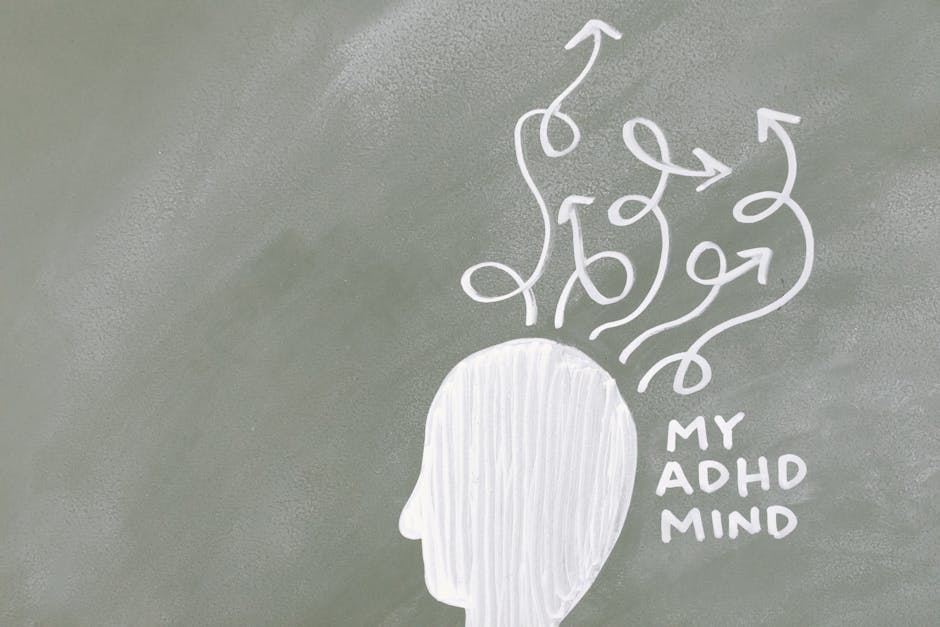
Defining the Terms: Effort vs. Alignment
In our office culture, we treat "focus" as a moral virtue—a sign of discipline. For the ADHD brain, however, focus is often an act of sheer, exhausting labour. It is the application of willpower to override an internal system that is constantly scanning for the next source of stimulation.
The Anatomy of Focus
Focus is conscious, effortful, and top-down. It requires you to actively suppress distractions and force your attention onto a singular task. It is the internal equivalent of holding a heavy box above your head. You can do it for a while, but eventually, your arms—or in this case, your prefrontal cortex—are going to give out.
The Anatomy of Flow
Flow, by contrast, is bottom-up. It is an emergent state where the task at hand is sufficiently engaging that the "self-monitoring" part of your brain goes quiet. You aren't "trying" to pay attention; you are simply unable to look away. In the context of ADHD, this is often where our divergent thinking—the ability to connect seemingly unrelated dots—truly shines.
The Creative Advantage: Why ADHD Brains Crave Flow
We need to stop talking about ADHD as a broken version of a "standard" brain. It is a different operating system. ADHD brains are often hardwired for divergent thinking—the ability to generate multiple solutions to a single problem. This is a massive asset in creative industries, yet it is a nightmare for traditional, linear task management.
When you are in a state of flow, you are likely leveraging that divergent processing. You aren't just completing a spreadsheet; you are reimagining the structure of the data. The problem arises when we are told to "just be more disciplined" in roles that demand rote, repetitive execution. That is not a lack of character; it is a mismatch between the cognitive style of the individual and the nature of the task.
Feature Focus Flow Energy Cost High (requires constant maintenance) Low (self-sustaining) Control Active, conscious choice Passive, immersive Internal Narrative "I should be doing this" "I am doing this" Cognitive Style Linear/Convergent Divergent/AssociativeThe UK Clinical Context: Guidance and Limits
Navigating ADHD in the UK is a journey that often begins on the NICE website. The National Institute for Health and Care Excellence (NICE) provides the definitive guidance on how ADHD should be managed within the NHS. It is crucial to remember that NICE guidelines focus on evidence-based intervention, which typically involves a combination of medication and psychoeducation. However, the system is currently strained, and the gap between clinical guidance and patient reality is significant.
When medication—the traditional first-line treatment—doesn't offer enough support or carries side effects that are unmanageable, some patients look towards further clinical pathways. This is where providers such as Releaf offer a look at the landscape of medical cannabis as a potential adjunct therapy for treatment-resistant symptoms. It is vital to frame this correctly: there is no "miracle cure." Every intervention is a tool aimed at managing the symptoms that prevent an individual from functioning in their day-to-day life.
The conversation around these treatments must remain grounded in clinical supervision. If you are hearing anecdotes about "miracle" results, take a breath. Medical treatment, whether stimulant-based or otherwise, is about increasing the baseline stability of the brain so that focus becomes a choice, rather than a war of attrition.
Tuesday at 3pm: Putting It Into Practice
So, how do we apply this in the real world? On a Tuesday at 3pm, you are likely depleted. If you try to force "focus" on a task that is entirely unstimulating, you will fail. The ADHD brain is not built for sustained attention on low-reward tasks without external scaffolding.
Three Realistic Strategies
The 'Flow-Hunt': If your brain is refusing to settle, don't force a linear task. Can you pivot to a high-stimulation, creative aspect of your work for 20 minutes? Use the flow to generate momentum. Environmental Design: If you must focus, you need to change your input. A change in scenery or a shift in the sensory environment—noise-cancelling headphones, a different desk, or a standing workstation—can provide the novelty your brain needs to re-engage its executive functions. Radical Acceptance of the 'Crash': If your executive function is gone, it is gone. Forcing yourself to "power through" usually results in errors that take twice as long to fix on Wednesday morning. Sometimes the most productive thing you can do at 3pm is to step away and reset.Reframing the Narrative
The persistent suggestion that ADHD individuals simply need more "discipline" is not only inaccurate—it is psychologically damaging. Discipline is a muscle, and for the ADHD brain, the gym is currently locked. We need to stop judging our brains for how they function and start adjusting our environments to allow for the brilliance of the divergent mind.

Whether you are currently exploring medication through official NICE-guided pathways, managing your condition through therapy, or simply trying to survive the Tuesday afternoon slump, remember that the goal isn't to become a person who can focus on anything at any time. The goal is to understand your unique cognitive architecture well enough to know when to push, when to pivot, and when to give yourself a break.
Disclaimer: This article is for informational purposes only and does not constitute medical advice. Please consult with your GP or a qualified healthcare professional regarding any concerns about your health or treatment pathways.